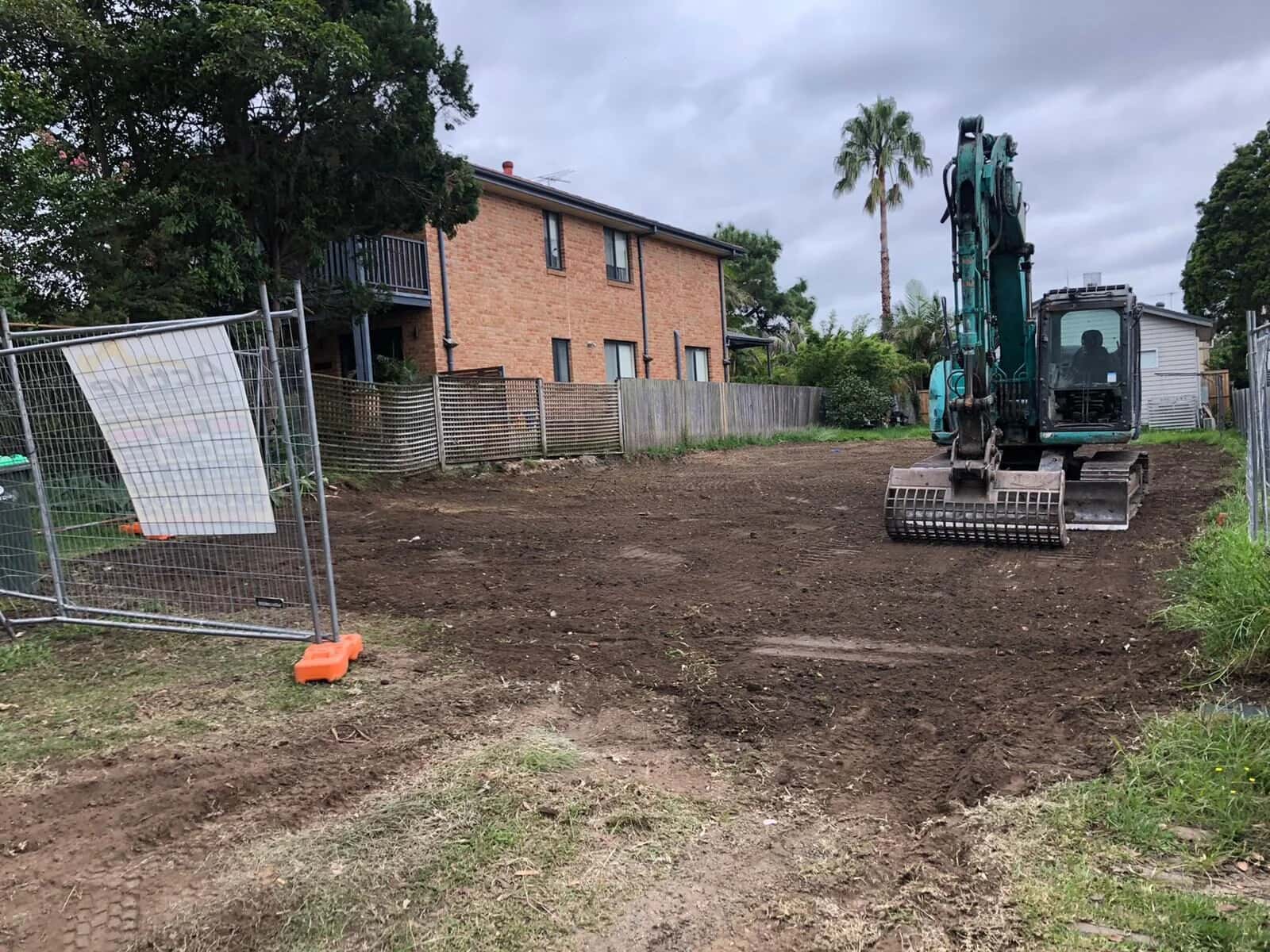
Price guide
Typical excavation prices in Sydney
What excavation typically costs in Sydney, by machine size, volume and tip fees, checked 10 October 2026. Use them as a planning guide: we quote your dig in writing, and the quote is free.
| Job | Typical range | What the figure covers |
|---|---|---|
| Mini excavator (1–2 t) with operator | $110–$170per hour | Ex GST. Minimum hire and float extra. |
| Mini excavator (3–5 t) with operator | $120–$210per hour | Ex GST. Minimum hire and float extra. |
| Excavator (5–8 t) with operator | $150–$250per hour | Ex GST. Minimum hire and float extra. |
| Excavator (10–14 t) with operator | $160–$330per hour | Ex GST. Prices vary most at this size; minimum hire and float extra. |
| Float, 1–5 t machine, delivery and pick-up | $250–$380 | Ex GST, return trip in metropolitan Sydney. Larger machines cost more to float. |
| Bulk digging in soil | $50–$120per m³ | GST may be extra. Rock costs two to four times as much. Check whether a quote includes disposal. |
| Tip fees for general or unclassified soil | $200–$400per tonne | GST may be extra. Includes the NSW waste levy (about $170 a tonne in 2025–26); trucks are extra. |
| Truck load of spoil taken away | $300–$600per load | GST may be extra. The type of spoil changes the tip fee. |
| Small residential excavation job | $1,500–$5,000 | GST may be extra. Basements and pool digs vary too much for a fair typical figure. |
What these prices cover
Hourly rates are for an excavator with its operator and fuel (wet hire), ex GST. Most hire has a minimum of 3 to 4 hours, plus the float that brings the machine in and takes it away.
Start with the result you need
Floor area alone can’t price an excavation. Depth, shape, existing levels, the ground and the finish all change the work, and a building platform, footing trenches and a general site clear are different jobs.
Send the drawings and survey you have, not just a description. If the design is still moving, tell us which dimensions are fixed and which may change, so you know what the price is based on.
Access decides the machine and the loading
The machine has to reach the dig and the spoil has to get out. The narrowest entry, changes in level, overhead wires and space for trucks all shape the approach, and photos from the street through to the work area show them best.
Tight access rarely rules excavation out, but it changes the machine and the pace, so we look before we price it. Measure the openings and mention shared driveways or surfaces that have to stay.
The ground and the spoil are separate questions
What comes out and where it goes both matter. Sandstone, old fill and buried surprises can change the method or the tip, so send any geotechnical or contamination report you already have.
Decide whether the soil stays on site, is reused in the design or leaves on trucks, and make sure the quote covers transport and disposal. A good quote also says how unexpected ground is handled, rather than treating every load the same.
Rock and sandstone excavation cost
Rock is one of the biggest swings in an excavation price. Rock typically costs two to four times as much to dig as soil, which runs about $50–$120 per m³ (GST may be extra). Sandstone needs a rock hammer or saw on the excavator, comes out far fewer cubic metres an hour, and costs more to cart away and dispose of.
Because nobody knows exactly where the rock starts until the digging does, many contractors quote rock as its own rate, by the cubic metre or by the hour for the machine and its rock attachment. Ask for that rate in writing, and how rock is measured and agreed on the day. The same goes for footing and service trenches: a trench that hits sandstone needs the same tools on a smaller scale, so ask how rock in a trench is priced as well as rock in the main dig.
- Our work
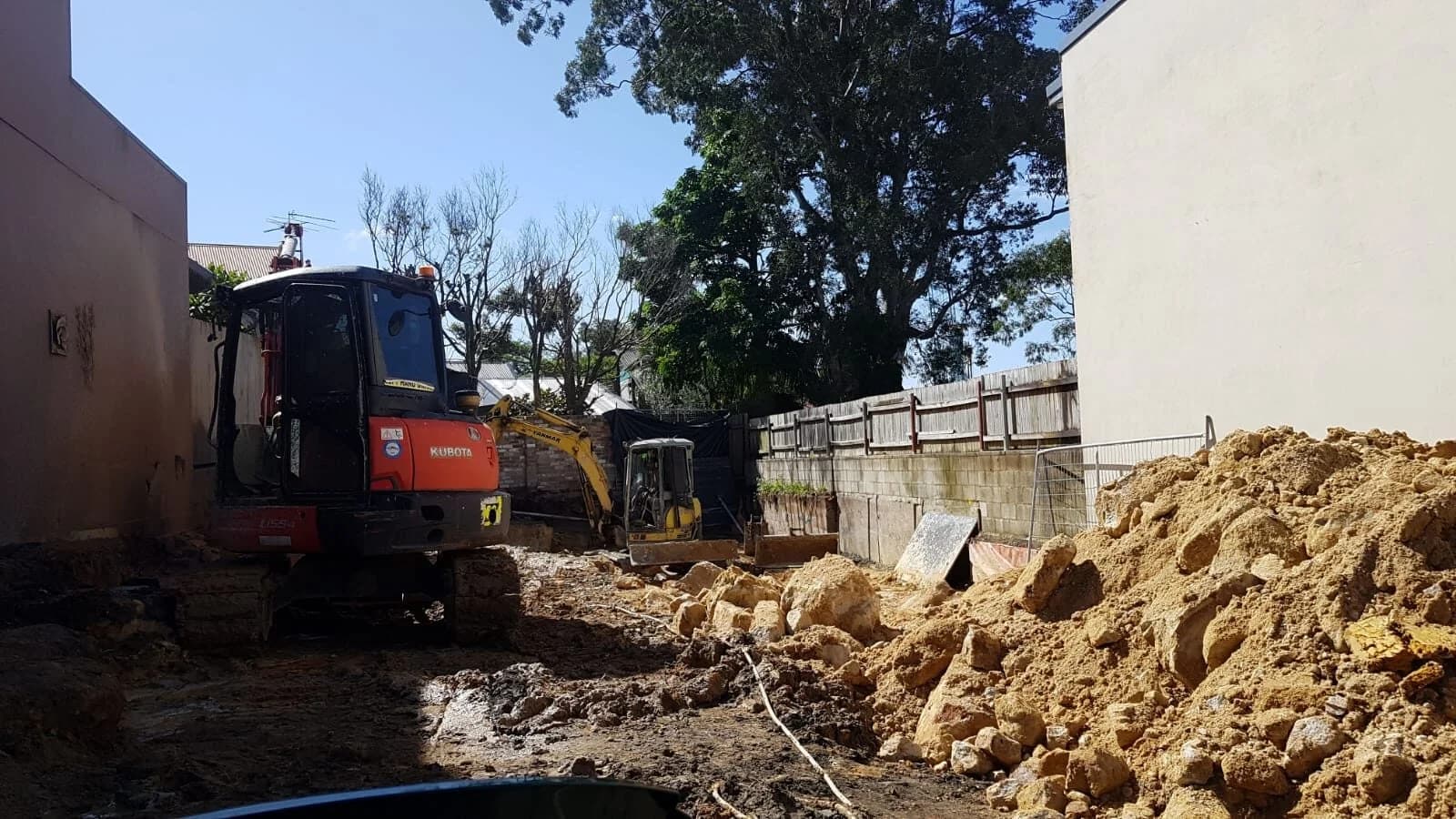
Our excavation in Bronte: two compact excavators beside a pile of sandstone spoil between the buildings
Underground services come first
Before anyone digs, find out what is underground. Before You Dig Australia gives free plans of the pipes and cables registered at an address, and they belong in the brief with your survey.
Compare how each price is worked out
The typical prices at the top of this guide are a planning guide, but the same floor area can be a very different dig. Check whether each quote is a fixed price for a defined job, an hourly rate or something else, and what it includes: machine, operator, trucks, disposal and finish.
Ask how extra work is approved and recorded. For an hourly quote, ask about minimum hire, travel, machine changes and waiting time: across Sydney, a float to bring a mini excavator in and take it away typically adds $250–$380 ex GST. For a fixed price, ask which ground and quantity assumptions would change it.
- Excavation dimensions and target levels
- Known ground conditions and available reports
- Equipment entry and truck access
- Spoil handling and disposal
- Finish, tolerances and the next trade’s requirements
08Compare
Turn a rough request into a useful excavation brief
| Instead of only saying… | Include… |
|---|---|
| Excavate the block | Dimensions, depths, survey and proposed levels. |
| Access is narrow | The smallest opening, turns, overhead wires and truck loading space. |
| Remove the soil | Known ground reports and whether spoil stays on site or needs transport and disposal. |
| Ready for the builder | The next trade’s drawings and required handover condition. |
Send an excavation enquiry
Attach the plans, dimensions, access measurements and clear site photos. Tell us whether the dig follows a demolition, and whether concrete or vegetation still has to come out.
Tell us what the next stage is and what your builder needs at handover, so you only pay for the finish the next trade actually needs.
Official sources
Checked 10 October 2026.