CDC or consent in Ku-ring-gai
Ku-ring-gai Council lists demolition, such as demolishing an existing house, as complying development. But it notes complying development is restricted in heritage conservation areas, and its DCP (Part 19) says development consent is needed to demolish a building in one.
So the first question in Ku-ring-gai is whether your house is a heritage item or in a conservation area.
Contributory homes and heritage items
Part 19 says council does not support demolishing heritage items or contributory properties in conservation areas. Demolishing a whole building in a conservation area is generally not supported unless the application shows there is no adverse streetscape impact, keeping the building is unreasonable, the alternatives have been considered and the replacement fits in. Replacement plans go in at the same time.
A heritage impact statement is required, and council wants a photographic record before and during major works, including demolition. Council also says a building’s grading is no longer worked out from a map, so check yours with council rather than relying on an old map.
03Your situation
What Ku-ring-gai asks, by situation
- IfNot heritage, not in a conservation area
- ThenComplying development may be available; tree questions go to your certifier.
- IfIn a conservation area
- ThenDevelopment consent, a heritage impact statement and replacement plans.
- IfProtected trees affected
- ThenAn AQF level 5 arborist’s report, dealt with in the DA.
- IfWorks over $10,000 (DA) or $25,000 (CDC)
- ThenThe infrastructure damage bond, paid before demolition.
How much of Ku-ring-gai is affected
On the NSW planning maps, conservation areas cover about half of Roseville’s land, about a third of Warrawee and Killara, and around a sixth of Lindfield, Gordon and Wahroonga. Wahroonga has more than 200 listed heritage items inside the suburb boundary, and Killara and Pymble about 160 each. Council’s DA guide (January 2026) also asks for heritage documentation for work near a heritage item or conservation area, not only on one.
Trees: 5 metres or a 150 mm trunk
Under its DCP definition, Ku-ring-gai protects trees 5 metres or more tall, or with a trunk of 150 mm or more at ground level; council’s tree FAQ words the test slightly differently, so check your tree with council. On heritage properties no exemptions apply. Trees that need to come out for a DA are dealt with in the DA, not a separate tree application, and for a CDC, council sends tree questions to the private certifier.
An arborist’s report, from an AQF level 5 arborist, is needed where protected trees are removed or work comes inside the drip line, setting out the tree and structural root zones under AS 4970. A tree application to remove one tree costs $88, plus $13 for each additional tree, as listed on 10 October 2026.
The waste plan
A waste management plan goes with any application to demolish a building, on council’s Waste Management Plan – Demolition, Construction & Use of Premises form. It states how waste is disposed of after demolition and covers hazardous building waste such as asbestos.
The damage bond, hoardings and skips
An infrastructure damage security bond applies to DAs with works over $10,000 and CDCs over $25,000. It is paid before any demolition starts, and council inspects the footpath and road first.
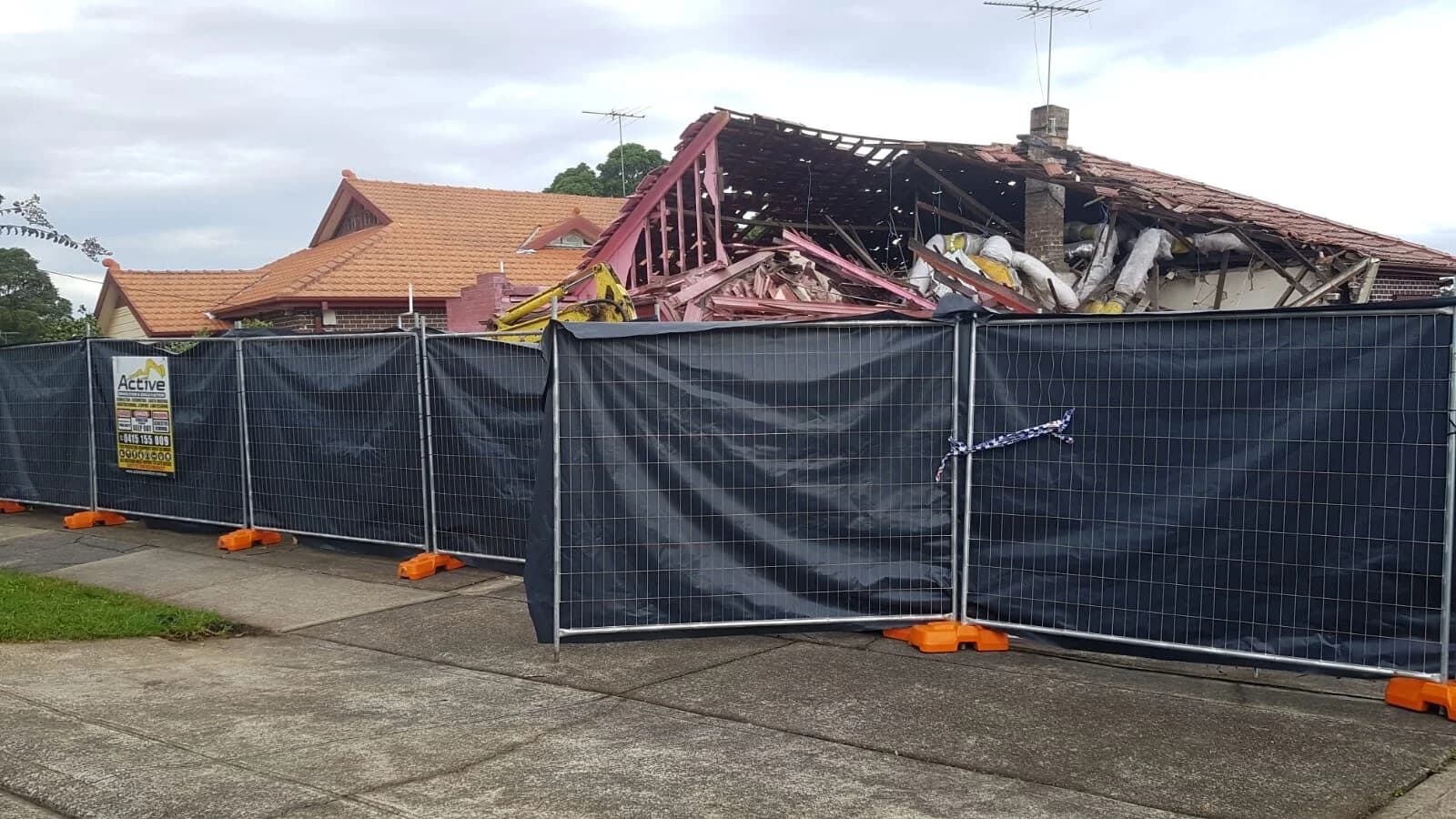
- Hoarding or barricade on the footpath: public liability insurance naming council, a traffic management plan and photos of any existing damage to the footway or road.
- Skip bins: none on the footway until a permit is issued.
Asbestos in Ku-ring-gai homes
Council advises assuming asbestos is present in homes built before 1987, and says only licensed removalists can remove friable asbestos or more than 10 m² of bonded asbestos.
Our team removes non-friable asbestos under our Class B licence, and friable asbestos goes to a licensed Class A subcontractor named in your quote.
Suburbs in Ku-ring-gai Council
These rules apply across the council area. Each suburb page has the local planning picture and how we work there.
Official sources
Checked 10 October 2026. Your council or certifier confirms what applies to your property.
- Ku-ring-gai: exempt and complying development (opens in a new tab)
- Ku-ring-gai: heritage development controls and approvals (opens in a new tab)
- Ku-ring-gai DCP Part 19: heritage and conservation areas (PDF) (opens in a new tab)
- Ku-ring-gai DA guide, January 2026 (PDF) (opens in a new tab)
- Ku-ring-gai: trees on your property (opens in a new tab)
- Ku-ring-gai waste management plan form (PDF) (opens in a new tab)
- Ku-ring-gai: infrastructure damage security bond (opens in a new tab)
- Ku-ring-gai: hoardings and barricades on the footpath (PDF) (opens in a new tab)
- Ku-ring-gai: roads and footpaths forms (opens in a new tab)
- Ku-ring-gai: asbestos (opens in a new tab)